Greece Moves to Embrace “Energy Democracy” with Plug-in Solar Reform
As we reported a few weeks ago, the United Kingdom is on the verge of legally approving plug-in solar systems based on the German model. The first providers are already positioning themselves, and initial price indications are circulating. A dynamic market development can therefore be expected. However, since last week it has also become known that a southern European country — with significantly higher solar potential — intends to follow suit.
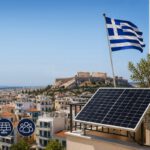
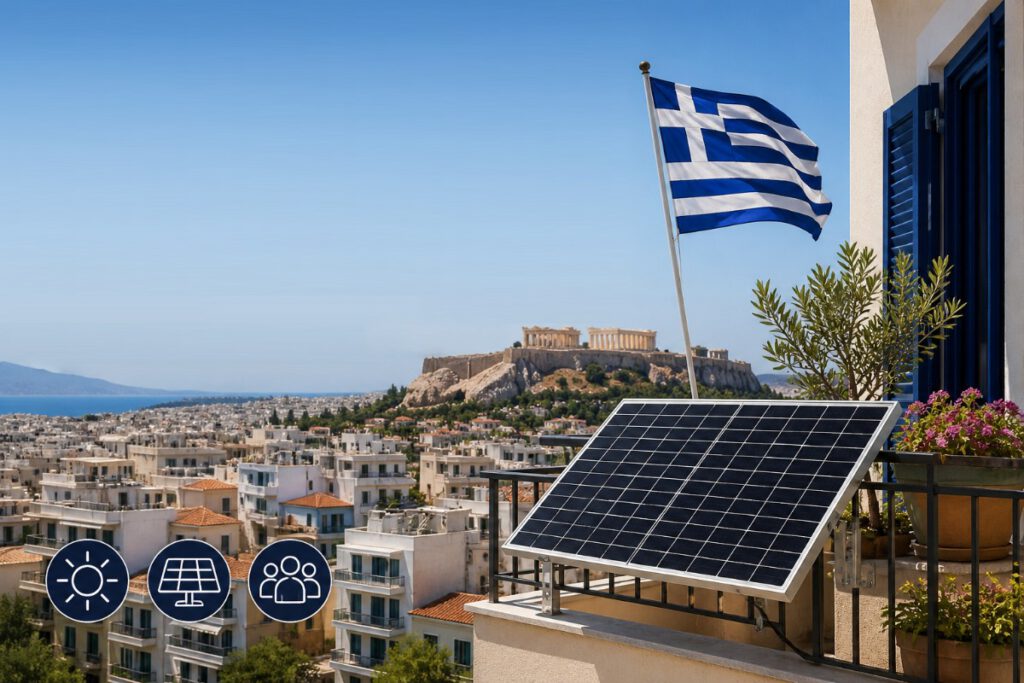
Greece — long a solar country — could now become a plug-in solar country as well. While many other European states are still hesitating, recent media reports suggest that Greece wants to explicitly open the door to balcony solar systems for all citizens. Environment and Energy Minister Stavros Papastavrou presented the initiative in parliament as part of a broader energy law. His guiding principle: sun and wind belong to everyone.
The draft legislation transposes several EU renewable energy directives into Greek law and aims to simplify permitting procedures, reduce bureaucracy, and increase transparency. Particularly noteworthy is the term Papastavrou uses in this context: “energy democracy.” That is precisely what plug-in solar is about. It is not about symbolic politics or hobbyist technology, but about whether citizens can actively participate in energy supply. Especially in Greece — a country with high solar irradiation, many multi-family buildings, island grids, and historically high dependence on imported fossil fuels — this approach seems more than logical.
It remains to be seen what the specific regulations will look like. The key question will be whether Greece truly creates a simple, safe, and legally clear framework for plug-in solar — with understandable power limits, straightforward registration procedures, and clear rules for tenants, homeowner associations, and grid operators. This is where it will be decided whether a promising political announcement turns into a genuine mass market.
We explicitly welcome this step toward energy democracy in the cradle of democracy and recall the anecdote of the poor philosopher Diogenes of Sinope, who, when King Alexander the Great offered to grant him a wish, simply replied:
“Stand out of my sunlight.”